About Brian Head
Highlights
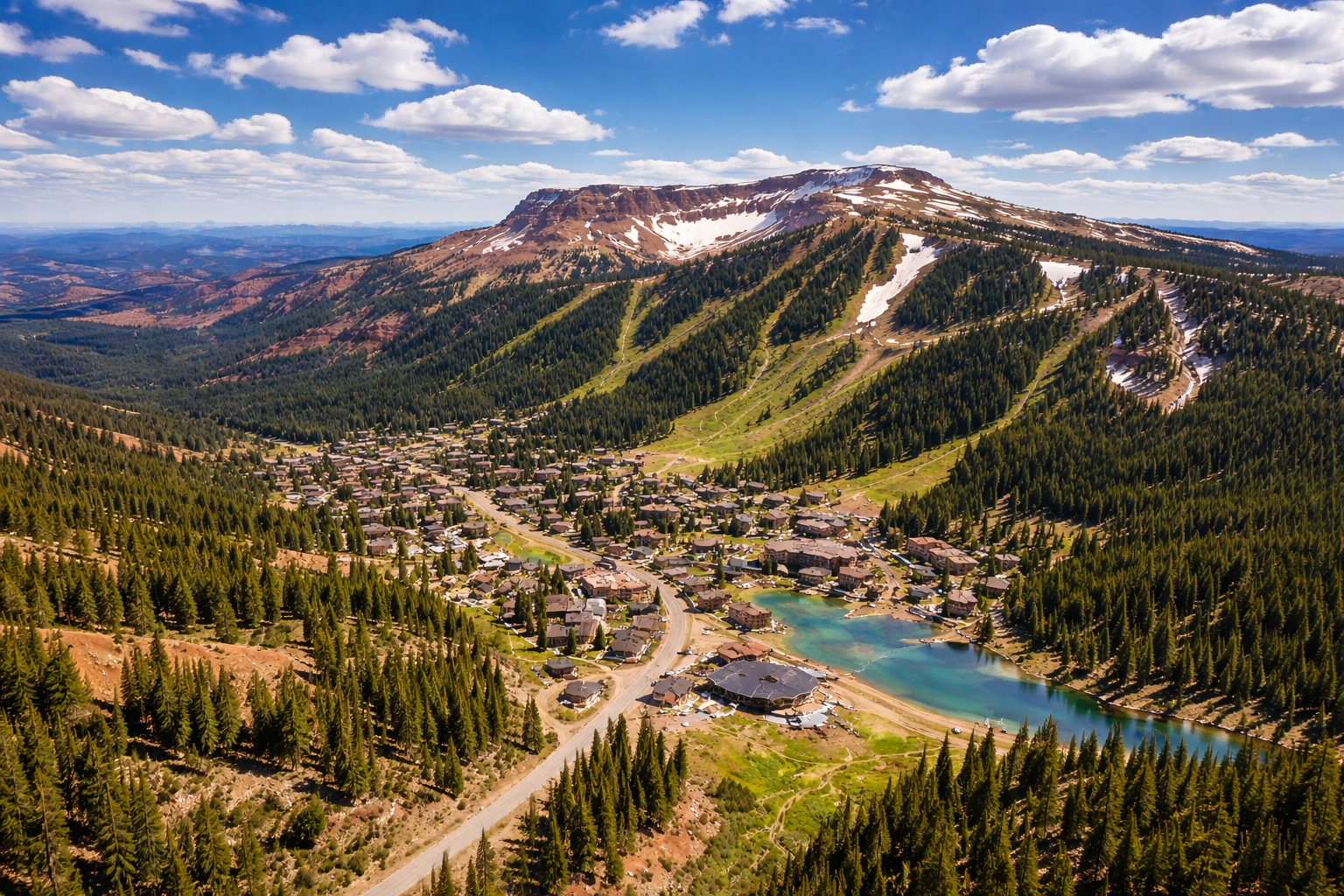
The Summit at Brian Head is a premier mountain basecamp ideally positioned for adventure, relaxation, and long term value. From a single destination, guests can explore Utah’s renowned Mighty 5 National Parks, including Arches National Park, Bryce Canyon National Park, Canyonlands National Park, Capitol Reef National Park, and Zion National Park. Few mountain communities in the West offer access to such a concentrated collection of world class national parks within easy driving distance.
Designed as a true four season destination, The Summit at Brian Head enhances the Brian Head experience for outdoor enthusiasts, visitors, and residents alike. Planned improvements focus on expanding both summer and winter recreation, including additional ski lifts, expanded ski terrain, and new public hiking and biking trails that integrate seamlessly with the surrounding alpine environment. The community is located on and adjacent to Brian Head Resort, offering a genuine ski in ski out experience that is increasingly rare in modern mountain development.
Since new ownership of the ski resort in 2012, skier visits have increased by approximately 50 percent, driven by infrastructure upgrades, resort enhancements, and expanded marketing efforts targeting Southern California. Summer visitation has also grown meaningfully. The Bristlecone Park and Pond has become a popular warm weather attraction, while increased summer tourism has fueled rising demand for mountain biking, ATV rentals, hiking, and camping. Brian Head has evolved into a year round alpine destination rather than a seasonal ski town.
Brian Head Resort is known for delivering The Greatest Snow on Earth®, with average annual snowfall of nearly 360 inches and Utah’s highest base elevation. The resort spans more than 660 acres across two connected mountains, Giant Steps and Navajo, and features 71 runs supported by 8 chair lifts and 3 surface lifts. Brian Head serves as a regional ski destination for Southern Utah, Southern California, Arizona, and Las Vegas. It is located 3.5 hours north of Las Vegas, 4 hours south of Salt Lake City, and 45 minutes from Cedar City, offering convenient access while maintaining the authenticity and uncrowded character that discerning travelers increasingly seek.
History
Brian Head, Utah is not an accidental mountain town. Its origins are rooted in geology, infrastructure, and deliberate risk-taking that positioned it as a four-season destination long before the concept became mainstream. Located atop the Markagunt Plateau, Brian Head sits on a high-elevation volcanic landscape that produces reliable snow, expansive alpine meadows, and cooler summer temperatures than the surrounding desert. These natural conditions form the foundation of a resort market built on climate advantage and visual scale rather than proximity to dense urban development.
Modern Brian Head began in the mid-1960s with the creation of a ski resort, a contrarian move in a region not yet associated with winter tourism. Opening in 1965, the resort was built ahead of demand, relying on elevation-driven snow reliability and the appeal of an uncrowded mountain experience. As visitation increased, Brian Head incorporated in 1975 to support infrastructure, governance, and long-term planning, marking its transition from seasonal outpost to investable municipality.
In recent decades, professional ownership and capital investment have integrated Brian Head into broader resort networks, increasing visitation and stabilizing demand through pass-based economics. Combined with its status as Utah’s highest base-elevation resort and its proximity to Cedar Breaks, Bryce Canyon, and Zion, Brian Head occupies a rare position within a powerful recreation corridor. Its small permanent population underscores a visitor-driven economy with significant remaining upside, making Brian Head a destination still early in its long-term development arc rather than one nearing saturation.
Brian Head STATISTICS
Brian Head has seen an incredible increase of visitors over the past decade. Due to limited lodging options, many visitors must travel to Cedar City for overnight stays.

Brian Head visitors reported by Dixie National Forest
Many nearby parks to which Brian Head is central to, have experienced similar growth in both visitation and tourism spending from out-of-state visitors.

2021 Iron County Tourism Spending by State

Nearby park Visitors Reported by National Park Service
925,000 JOBS
$104.5 BILLION
In Outdoor Recreation Spending in the Intermountain West
142,000 JOBS
$8.17 BILLION
In Utah Outdoor Tourism Spending
2,372 JOBS
$110 MILLION
In Iron County Tourism Spending
State of Utah
$5.75 MILLION
Investment to expand tourism beyond the Mighty 5 Parks with a goal to generate ~ 2 million trips.
Cedar Breaks national Park
42% Increase
In Annual Visitation Since 2010 and 84% Since 2006
Travel Related
Sales Tax + 14.5%
2015 - 2016
Leisure & Hospitality Jobs
+ 9.8%
Average Hotel Occupancy
+ 3.8%